
Blog & news
5G vs satellite internet: connectivity options when fibre hasn’t reached you
16/01/2026 · lbritton.admin
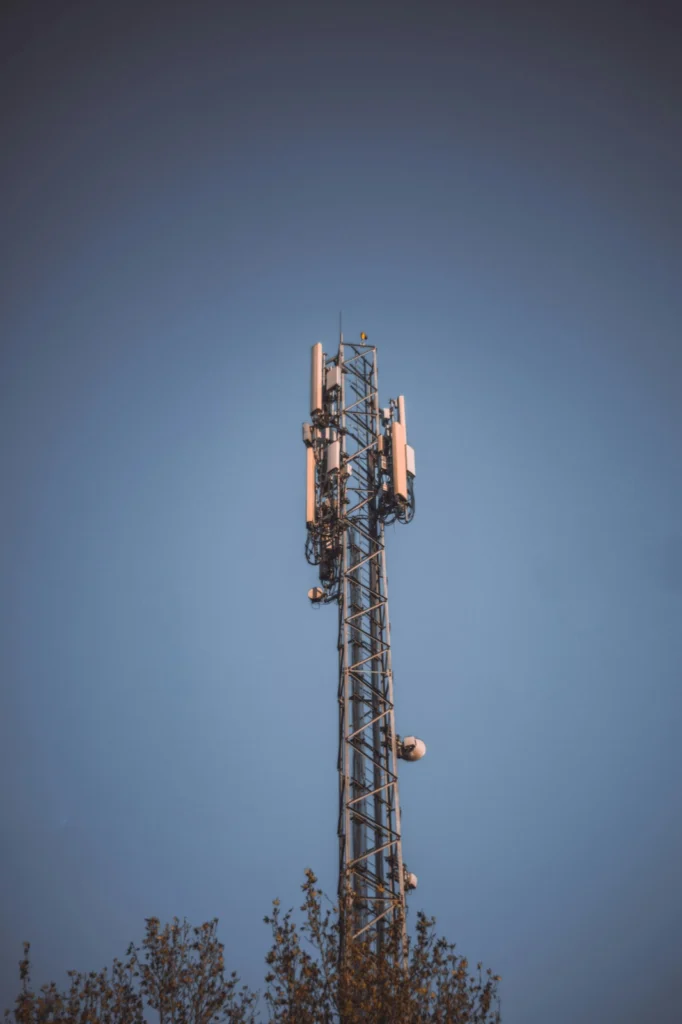
If full-fibre broadband hasn’t reached your address yet, the choice usually comes down to two genuinely capable alternatives: 5G internet and satellite internet. Both have improved dramatically in recent years, and both suit different situations — the right answer depends on what’s actually available where you are, not which technology sounds more advanced.
How 5G internet works for business connectivity
5G internet uses the mobile network rather than a physical fibre or copper line, delivered through a router that connects to the nearest mast. Where signal strength is good, it can rival or beat traditional broadband speeds, and it’s usually quick to install since there’s no groundwork or cabling involved — often live within days rather than weeks.
How satellite internet works
Modern satellite internet uses low-earth-orbit satellites positioned a few hundred miles up, a major improvement on older geostationary satellite technology that made video calls frustrating due to high latency. It doesn’t depend on mobile mast coverage at all, which makes it the more reliable option for genuinely remote sites where mobile signal is weak or absent.
Side-by-side comparison
| Factor | 5G internet | Satellite internet |
|---|---|---|
| Depends on | Mobile mast signal strength | Clear sky view, not mast coverage |
| Typical install time | Days | Days to a couple of weeks |
| Best suited to | Good mobile signal areas, backup connectivity | Remote or rural sites, weak mobile coverage |
| Latency | Very low | Low (modern LEO), higher than fixed lines |
When 5G is the better choice
If your site has decent mobile signal already — check by simply looking at how many bars a phone gets there — 5G internet is usually the faster, simpler and often cheaper option, and it doubles well as automatic backup connectivity for a business that already has a fixed line.
When satellite makes more sense
For genuinely rural sites, construction locations, or anywhere mobile coverage is patchy or non-existent, satellite internet is the more dependable choice precisely because it isn’t relying on the same infrastructure that’s already failing to reach you. It has become a legitimate primary connection option, not just a last resort.
Using both together
Some businesses use one as primary and the other as automatic failover — a construction site with a satellite primary connection and 5G backup, for example, giving genuine resilience regardless of which technology has an issue on a given day.
Working out which fits your site
The honest answer depends entirely on your specific location and what’s actually achievable there. Get in touch with your postcode and we’ll tell you plainly which option — or combination — makes the most sense for your business.